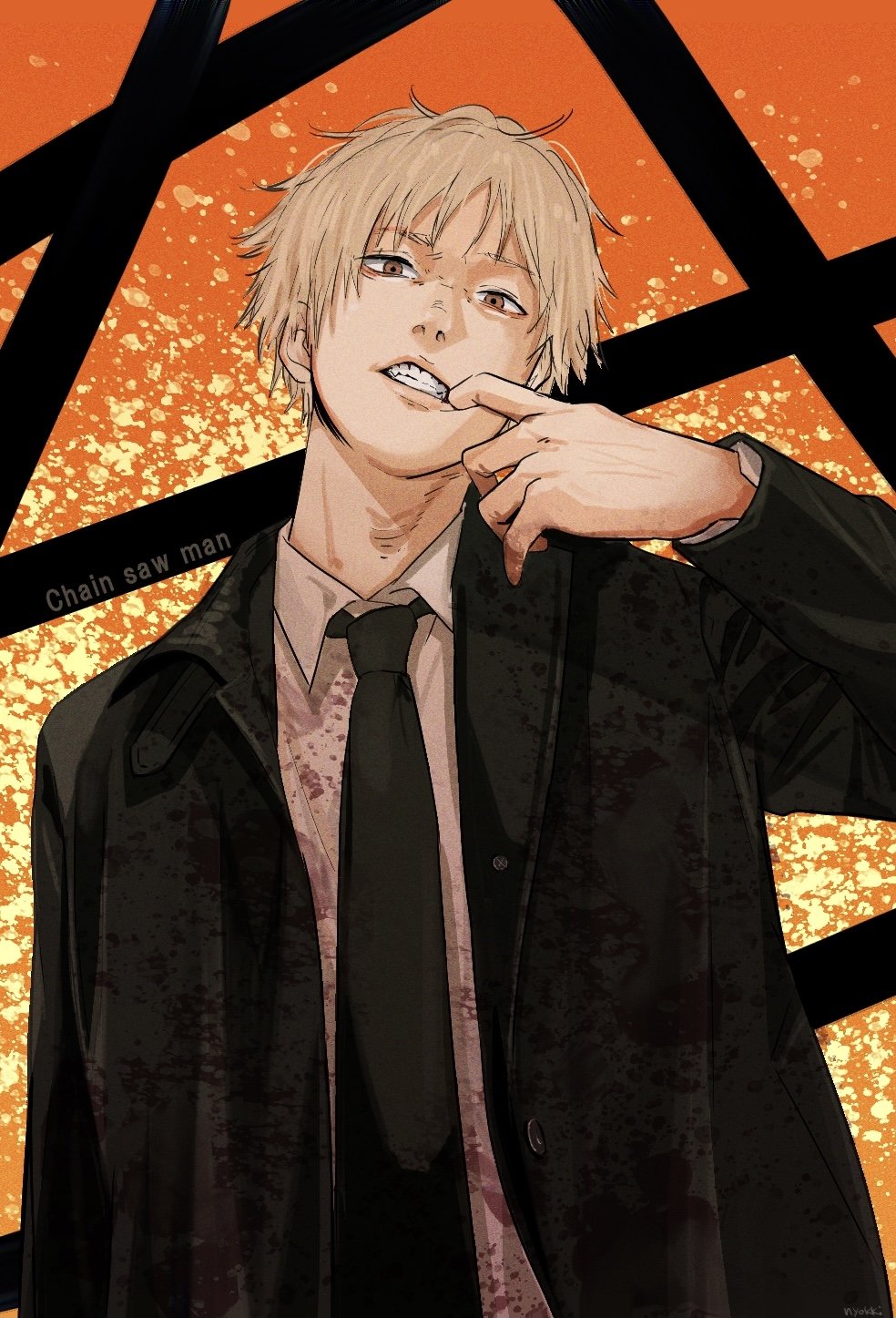
If you’ve landed here searching for "Denji in Fullmetal Alchemist Brotherhood explained," you're likely encountering a common misconception among anime fans. Let's set the record straight right from the start: Denji, the protagonist from Chainsaw Man, does not appear in Fullmetal Alchemist: Brotherhood. These are two entirely separate and distinct anime universes, created by different mangaka, with unique stories, characters, and settings.
It’s easy to mix up details across the vast landscape of anime, especially with so many incredible series captivating audiences. Our goal here is to clarify this misunderstanding by detailing the true narrative of Fullmetal Alchemist: Brotherhood, distinguishing it from other Fullmetal Alchemist adaptations, and for those still curious, explaining who Denji actually is.
Setting the Record Straight: Why Denji Isn't in Fullmetal Alchemist Brotherhood
The confusion likely stems from the sheer popularity of both Fullmetal Alchemist: Brotherhood and Chainsaw Man. While both feature young male protagonists with incredible, often visceral, powers and compelling, dark narratives, their worlds never intersect. Denji is a character born from Tatsuki Fujimoto's brilliant and brutal manga, Chainsaw Man, where he transforms into the eponymous Devil Hunter. His journey involves battling devils, struggling with poverty, and yearning for a simple life, all set against a modern, gritty backdrop.
To understand Denji's unique story and why he belongs solely in his own universe, you might be interested in . Meanwhile, Fullmetal Alchemist: Brotherhood, a masterpiece by Hiromu Arakawa, takes place in a steampunk-inspired world where alchemy is a science, and the fight is against existential threats and the consequences of human hubris.
Understanding Fullmetal Alchemist: Brotherhood's True Narrative
Fullmetal Alchemist: Brotherhood (FMA:B) is celebrated for its faithful adaptation of Hiromu Arakawa's original manga. The story follows brothers Edward and Alphonse Elric, who commit the ultimate taboo of human transmutation in a desperate attempt to revive their deceased mother. This forbidden act costs Edward an arm and a leg, and Alphonse his entire body, leaving his soul bound to a suit of armor. Their perilous journey to regain their original bodies involves searching for the mythical Philosopher's Stone, uncovering a vast conspiracy, and confronting the Homunculi—beings named after the seven deadly sins.
The true antagonist in FMA:B is "Father," an ancient Homunculus striving for godhood by sacrificing the entire nation of Amestris. The series culminates in an epic battle against Father and his creations, leading to Edward making the ultimate sacrifice of his alchemy abilities to restore Alphonse's body. If you want to dive deeper into the emotional and world-changing climax of the series, we've got a comprehensive guide to .
The Elric Brothers' Journey Beyond the Final Battle
The conclusion of Fullmetal Alchemist: Brotherhood offers a satisfying and hopeful resolution for the Elric brothers and their allies. After defeating Father and restoring Al's body, Ed and Al return home to Resembool. Two years later, Al embarks on a journey to Xing to study Alkahestry, the eastern counterpart to alchemy, alongside May Chang, while Ed heads west to explore scientific advancements. Before their parting, Ed famously proposes to Winry Rockbell, showcasing their enduring love.
The series closes with a heartwarming photo of the future, depicting Ed and Winry with their two children, alongside Al and May. Other beloved characters also find their peace or continue their impactful work; Van Hohenheim is buried beside Trisha, Ling Yao embraces his destiny as the emperor of Xing, and Roy Mustang begins the arduous task of rebuilding Ishval. To trace their individual paths and see how everyone's story concludes, you should explore .
The Fullmetal Alchemist Universe: Distinguishing Between Adaptations
It's important to note that Fullmetal Alchemist actually has two main anime adaptations, which can sometimes lead to confusion regarding specific plot points. While Brotherhood is a faithful adaptation of the entire manga, the 2003 Fullmetal Alchemist anime began airing when the manga was still ongoing. This meant that the 2003 series eventually diverged significantly from the manga's storyline, creating its own unique narrative path from the halfway point.
In the 2003 version, for instance, Homunculi are born from failed human transmutations, with Sloth specifically being the result of Edward and Alphonse's attempt to revive their mother. The main antagonist becomes Dante, and the ending sees Edward trapped in a parallel world resembling 1920s Germany, separated from Alphonse. To clearly understand all the narrative forks and character differences between these two iconic adaptations, we recommend .
The Continuation of FMA 2003: Conqueror of Shamballa
The alternate ending of the 2003 anime series was further expanded in Fullmetal Alchemist the Movie: Conqueror of Shamballa. This film directly continues Edward's story two years after the anime's conclusion, showing him navigating the real world while attempting to find a way back to Amestris. He becomes entangled with the Thule Society, a real-world Nazi-affiliated organization attempting to open a portal to Amestris, which they refer to as "Shamballa."
Eventually, Edward and Alphonse are reunited, but their reunion comes with a heavy choice. To maintain the balance between their worlds and prevent further catastrophe, Ed chooses to remain in the real world, and Al, ever loyal, follows him. They settle in Germany on the cusp of World War II, living apart from their friends back in Amestris. For a complete understanding of this compelling cinematic conclusion to the 2003 series, consider reading our detailed .
Beyond the Anime: Exploring the Fullmetal Alchemist Manga
While Fullmetal Alchemist: Brotherhood is lauded for its fidelity to the source material, a few minor details and bonus chapters from Hiromu Arakawa's manga didn't make it into the anime. One notable example is the bonus chapter titled "Another Journey's End." This short story provides a touching coda to Alphonse's return home.
In this chapter, Al receives his old, empty suit of armor in the mail after his body is restored. Instead of keeping it as a relic of his past, Al, demonstrating his newfound compassion and growth, asks Winry to melt down the armor. His intention is to have the metal repurposed into new automail for those in need, symbolizing his desire to help others and move forward from his past hardships. If you're eager to discover more such poignant moments and minor story beats that were exclusive to the original comic, check out our guide on .
In conclusion, while the idea of a character crossover like Denji appearing in Fullmetal Alchemist: Brotherhood might spark interesting fan theories, the reality is that both Chainsaw Man and Fullmetal Alchemist stand strong on their own unique merits. Each offers a rich, distinct world full of compelling characters and unforgettable narratives that are well worth exploring. So, whether your next adventure is chasing devils with Denji or uncovering alchemical conspiracies with the Elric brothers, enjoy the journey!